Is Duolingo Enough to Learn German After Moving?
Quick Take
Duolingo is enough if you already learned German in school and just need a refresher after moving. It’s not enough if you’re starting from scratch without understanding grammar and structure. After moving to Germany, timing matters because stress, mental bandwidth, and real-life pressure affect how much you can actually absorb — regardless of the tool.
When people move to Germany, Duolingo is often the first app they download.
It’s accessible. It’s gamified. It’s everywhere. And for many people, it feels like the logical starting point.
But is it actually enough?
The honest answer: it depends on your foundation and your life situation.
When We Started Using Duolingo
We downloaded Duolingo long before we moved to Germany.
Back then, we’d open it in the days leading up to a European vacation. We’d practice casually, build a short streak, and feel productive. But as soon as we landed back home, the habit disappeared.
At that point, our German level was enough to survive as tourists or navigate short business trips. We didn’t need depth. We needed phrases.
We thought Duolingo would help because:
It was easy to access on our phones
Everyone talked about it
It felt like the default language-learning tool
After moving to Germany, though, the stakes changed.
What Duolingo Actually Helped With
Duolingo was helpful in more ways than people give it credit for.
It helped us build a daily routine. Even five minutes created a touchpoint with the language.
It made repetition feel structured. Drilling vocabulary daily created familiarity. Words stopped feeling completely foreign.
It also lowered the barrier to learning new vocabulary in different contexts. Seeing the same word used in multiple sentences built pattern recognition — even if we didn’t fully understand why the pattern worked.
For consistency and exposure, Duolingo did its job.
Where Duolingo Fell Short After Moving
The cracks started to show once real life demanded more than vocabulary.
Duolingo didn’t prepare us for:
German grammar rules
Declension patterns
Word order (yes, TEKAMOLO)
Understanding why something was correct
The app often relies on repetition and pattern guessing. If you don’t already understand the concept, you can get answers right by instinct — or wrong without knowing why.
Real conversations still felt intimidating because nothing was scripted. Native speakers didn’t pause. They didn’t use simplified structures. And German paperwork? That’s an entirely different language.
Official letters, rental contracts, and government communication use formal, dense German. Duolingo doesn’t prepare you for that level of complexity.
That’s when we realized: vocabulary exposure isn’t the same as structural understanding.
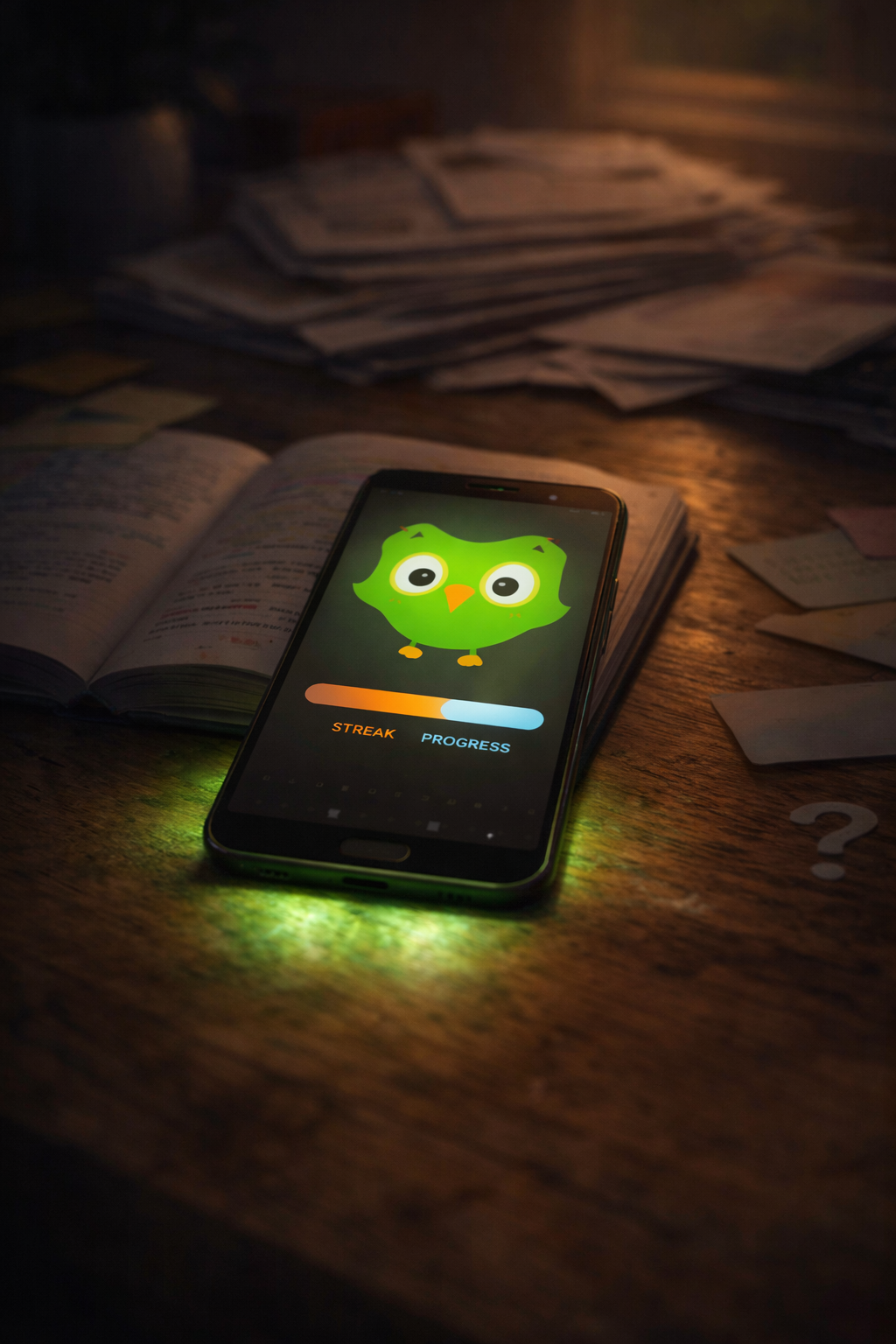
The Streak Illusion
There was a phase when we cared more about not losing our streak than about actually improving.
Using a Streak Freeze felt productive. Watching the number climb felt validating. Friends could see that we were “learning German every day.”
But streaks measure activity — not progress.
Real progress came from:
Listening to colleagues speak German
Trying to form sentences out loud
Making mistakes in real conversations
Using other learning materials to understand grammar
Confidence didn’t come from tapping answers. It came from speaking imperfectly and continuously improving with every interaction.
So… Is It Enough?
Duolingo is enough if your goal is:
Expanding vocabulary
Refreshing previously learned German
Creating a light daily habit
It’s not enough if your goal is:
Understanding grammar deeply
Mastering sentence structure
Building conversational confidence
Preparing for real-world complexity
After moving to Germany, Duolingo works best as a support tool, not a primary teacher.
For us, it became a daily quiz — reinforcing what we learned elsewhere, especially from Coffee Break German. That combination worked well because Duolingo tested us, but didn’t pretend to teach everything.
What Changed for Us
Eventually, Duolingo became our quizzer, not our tutor.
When I got something wrong, instead of guessing until the app accepted an answer, I started asking Microsoft Copilot to explain why it was wrong. That shift changed everything.
Duolingo showed me the mistake.
Copilot explained the rule.
Understanding the “why” behind errors accelerated my learning — not just in German, but in Turkish and other languages as well.
That’s when language learning stopped being a streak game and became a structured process.
And that’s what we’ll explore next: how we practice German now — sustainably, intentionally, and without burnout.